


Country Fire Authority - Churchill Brigade - February 2026
What a busy year in 2025
Did you know that the Churchill Fire Brigade responded to 183 calls for assistance in 2025?
Types of call ranged from fires and explosions (72), motor vehicle crashes (10), hazardous condition including gas leaks and fuel spills (15), false alarms (25), service calls (10), support calls to assist other agencies (17) and good intent calls (10).
Churchill approved for new field command vehicle
Under the state government 2025/2026 Volunteer Emergency Services Equipment Program (VESEP), the brigade has been approved for a replacement Field Command Vehicle. The new vehicle will be a Ford Ranger XLT with a custom built back, costing around $103,000 when fully equipped. The brigade will fund $35,500 and the government will contribute $71,000 through the VESEP fund.
This upgraded vehicle will provide much needed upgrades to the command function when managing incidents, as well as providing crew transport to training and operations as well as supporting our fire equipment maintenance activities servicing fire extinguishers, hose reels and fire blankets in businesses throughout the local area.
Churchill fire station upgrade
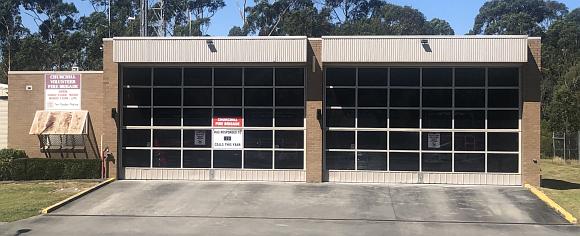
Planning is underway for our fire station to receive an extensive upgrade during 2026. The upgrade will see a full refurbishment of the kitchen, meeting room and toilet facilities, with improvements and an extension of the motor room. Additional facilities to enable laundry and drying of firefighter uniforms (yellows), a dedicated room for cleaning and managing our protective equipment such as breathing apparatus, a new workshop area and offices for the brigade and Merton Group will be also be welcome additions to the station footprint.
Tenders for the work closed in January, and it is hoped works will commence in March or April.
On a high fire danger day, do you have a plan?
Over January 2026, across the state we have seen a number of High, Extreme and Catastrophic fire danger days. Do you have a plan in place for what you would do on a high fire danger day?
CFA Churchill Fire Brigade Captain Matt Fisher said people needed to take fire danger ratings into account, what this means for them and they should respond accordingly.
CFA Gippsland regional commander Michael Owen said leaving early was the safest option. “Not when you can see flames or smell smoke. Leaving early means avoiding panic, being trapped, making the wrong choices and risking serious injury or death,” he said.
“Even if you have a plan, you need situational awareness and circumstances will vary greatly. Be aware of what is going on around you, not just in a fire, but in any emergency. Listen to the radio, TV or talk to neighbours,” he said.
The safest option for anyone living in high fire danger areas is to leave early on hot and windy days that create dry and dangerous conditions.
CFA Churchill Fire Brigade Captain Matt Fisher said locals should make a plan and stick to it. Captain Fisher said that the local area was now very dry, pushed along by the last few weeks of very hot and windy days. “If you plan to leave early, then do it, it is no good waiting. You can replace houses and things, just take your family and pets and go,” Captain Fisher said.
A CFA bushfire community survey revealed that only one in ten Victorians in high bushfire risk areas would leave early on high danger days – the lowest number in seven years.
Captain Fisher said many people had let their guard down since Black Saturday in 2009 but they need to understand that the 2025/26 fire season is now well and truly underway.
“There has been a bit of malaise around. In recent years we have not had much fire activity but this will not be the case for much longer. The season has well and truly started and the bush and grass is very dry,” he said.
For information on how to Plan and Prepare, see the CFA website cfa.vic.gov.au/plan-prepare
Know what the new Fire Danger Ratings mean
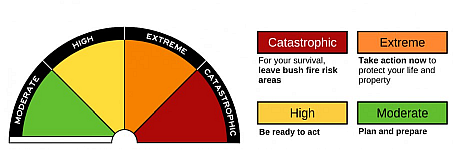
Moderate - Plan and prepare
Most fires can be controlled.
- stay up to date and be ready to act if there is a fire.
High - Be ready to act
Fires can be dangerous.
- There is a heightened risk. Be alert for fires in your area.
- Decide what you will do if a fire starts.
- If a fire starts, your life and property may be at risk. The safest option is to avoid bushfire risk areas.
Extreme - Take action now to protect your life
Fires will spread quickly and be extremely dangerous.
- These are dangerous fire conditions.
- Check your bushfire plan and that your property is fire ready.
- If a fire starts, take immediate action. If you and your property are not prepared to the highest level, go to a safer location well before the fire impacts.
- Reconsider travel through bushfire risk areas.
- Expect hot, dry and windy conditions.
- Leaving bushfire risk areas early in the day is your safest option.
Catastrophic - For your survival, leave bushfire risk areas
If a fire starts and takes hold, lives are likely to be lost.
- These are the most dangerous conditions for a fire.
- Your life may depend on the decisions you make, even before there is a fire.
- For your survival, do not be in bushfire risk areas.
- Stay safe by going to a safer location early in the morning or the night before.
- If a fire starts and takes hold, lives and properties are likely to be lost.
- Homes cannot withstand fires in these conditions. You may not be able to leave and help may not be available.
- Monitor conditions and official sources for warnings.
- Adhere to local regulations governing fire activity.
- Ensure any industrial or agricultural activities adhere to relevant industry guidelines.
- If a fire starts near you, take action immediately to protect your life. Do not wait for a warning.
Download the Vic Emergency app (emergency.vic.gov.au) and create a local watch zone to stay up to date with local information on Fire Danger Ratings, local incidents, and Warnings and Advice.