
Looking Back - May 2026
History can teach us plenty
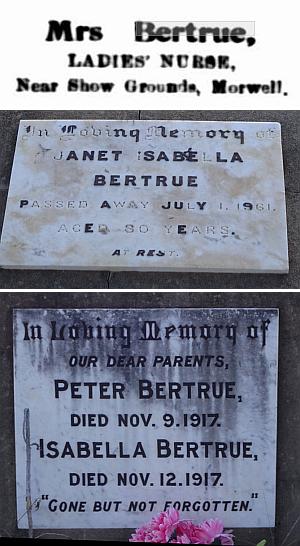
Only two books have been written about Morwell’s town history. These do not mention Peter Bertrue nor his wife, Isabella Bertrue.
Peter was quite a saviour for the good folk of town back on January 28, 1888, when he was given a permanent appointment “to the office of scavenger.” His Key Performance Indicator (KPI) was to restore the town to a “wholesome condition.”
When Peter was appointed, Morwell was described as “insanatory”; the correct spelling should have been “insanitary”. Writing to Morwell Shire Council in January 1915, one resident described Morwell as “an eye - sore” because of rubbish being dumped anywhere, everywhere. Others, especially some Shire Councillors, were concerned about the “town’s pestiferous condition.”
About this time, there was supposedly a rubbish depot at the eastern end of town (approximately where an old crumbling coal dredger is currently sited as a tourist attraction). Councillors wanted this depot fenced. It is written that what might have been a rubbish tip, was doubling up as a nightsoil depot.
Rubbish, and lots of it. Cr. Charles Davey (licensee at Murdoch’s Hotel) pointed out that there were unsightly heaps of rubbish containing tins, broken bottles, etc. deposited all over the town and on several of the main roads. The practice should be stopped, and all those depositing rubbish made to remove it. The Shire Secretary (Thomas Sinclair) said it was very hard to catch people, but the Inspector of Nuisances (Constable Gorman) had caught a few and made them remove the rubbish they had deposited. (Morwell Advertiser, May 19, 1905.)
It is difficult to conclude if Peter Bertrue achieved his KPI. Nonetheless, Peter kept his job until he gave up his contract in October 1907. He was being paid £2.5/- annually with extra income from whatever was saleable. Isabella advertised her services as a “Ladies Nurse”.
Peter, a carpenter by trade, was originally from Bordeaux, France and was attracted to a possible fortune from gold via alluvial mining in the Bendigo area. Isabella was from Marong and they had two children, Janet Isabella and Peter Francis. From Morwell, the family moved to Queensland, living at Tara, near Dalby.
Peter received his carrier’s licence in February 1894 and, at various times, named his occupation as a labourer, a dayman and a nightman. That is, he was multiskilled. While in Morwell, he was fined for not sending his children to school - a smallish matter for Isabella and Peter.
One rather precarious situation for him, and he was not guilty, occurred when his half-full night cart was allegedly tipped over by Mr Joe Quigley in the backyard of Smyth’s Cricketers Arms Hotel. Joe apparently didn’t like the tip-dray in the yard - at 12.15 am on December 24, 1901. After a magisterial hearing, Joe was fined £5 and costs of £2.8/-. Apparently, the stench lasted for some weeks. Constable Gorman gave evidence in this matter.
Putrid matter, urine, stale beer, stale soap suds, and other obnoxious refuse were allowed to stagnate in drains and channels for days at a time. It was in early March 1914 when council accepted a tender for £12.17/- from Mr J Robertson to erect a fence around the rubbish tip at the Ridge.
Isabella and Peter apparently took up farming at Tara, but his death was recorded in The Toowoomba Chronicle, Saturday November 17, 1917 edition. Isabella died a week later. Both are interred in the Tara General Cemetery.
Peter’s appointment back in 1888 signified a cultural change was urgent. Effective, efficient disposal of rubbish still remains a contentious issue in 2026. Back in the day, residents were concerned about vermin, typhoid, and tramps sleeping in waste.
These days, it is worth giving consideration to establishing municipal appointments similar to what Peter Bertrue and Constable Gorman held in earlier times.
Now for a change of topic. In the March 2026 edition of the Churchill and District News (CDN), words were written about the Riley car. In Morwell, Alf Grange was a local representative for Rileys. Your scribe wrote “Locally, there are keen Riley devotees working all hours, all weeks and years to reconstruct their sleek, commodious Riley.”
What a pleasant surprise when a number of CDN readers made contact after reading that March issue. A correction was urgently required - that is, the car named after its creator, William Riley Junior, however, the company did not start as part of the Nuffield Company in 1890.
Initially, the company began as the Riley Cycle Company, moving to manufacture engines as the Riley Engine Company. Through 1913, William’s sons began a focus on automobiles. Further rationalisation was apparent when it was announced on September 9, 1938 that Lord Nuffield had bought the assets and goodwill of Riley Motors (Coventry) Limited. Nonetheless, Rileys were still produced under a new management structure.
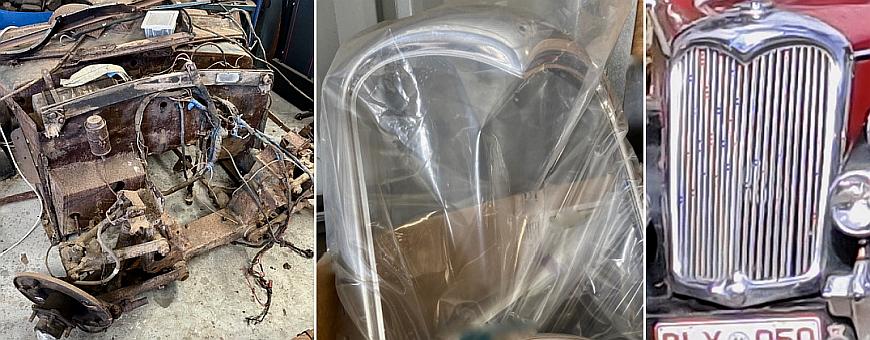
My astute reader explained just over 28,000 Riley cars were produced in the RM (Riley Motors) series between 1945 and 1957. Two accompanying pictures show restoration of a RM 1950 model. The front-end awaits its engine and a highly polished distinctive grill surround is protected in heavy plastic also ready for final positioning.
This local history section has appeared in the CDN for many years now. It is always encouraging when readers make contact. Thanks everyone.
It is also relevant to emphasize that Artificial Intelligence (AI) is not used.
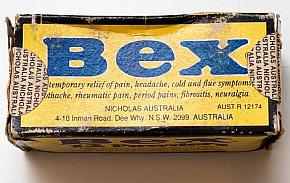
A reminder of a past history - thank goodness. During the 1950s 1960s and even earlier, a marketing catchcry yelled “(have) a cup of tea, a Bex and a good lie down.”